How to Analyze Your Competitors in Charlotte's Growing Market
Understanding what your competitors do well and where they fall short is one of the fastest ways to grow your own business. For small and growing companies in Charlotte, NC, the local market is competitive enough that a few smart observations can give you a real edge. Instead of guessing, you can build a simple, repeatable process for reviewing what other businesses in your space are doing - and then use those insights to make better decisions about your own pricing, service, and marketing.
This article walks through a practical competitor analysis checklist. The goal is not to copy what others do, but to spot gaps you can fill and strengths you can differentiate against. Whether you run a local service business, an e-commerce store, or a professional practice, these checks will help you see the market more clearly.
Start with Who Your Real Competitors Are
The first step is to identify the businesses that actually compete for the same customers you want. It is easy to focus on the biggest names in your industry, but your real competitors are the ones that show up for the same search terms, serve the same neighborhoods, and offer similar price points. Make a list of five to ten businesses that your potential customers compare you against. Include both direct competitors (same service, same area) and indirect ones (different service but same customer need, like a handyman versus a plumber for a small repair).
What to check:
- Search for your main service category plus "Charlotte, NC" or "28202" and see who ranks on the first page. These are your organic competitors.
- Look at Google Maps results for the same terms. The businesses with high reviews and frequent updates are the ones customers see first.
- Ask existing customers who else they considered. Their answers often reveal competitors you had not thought of.
Review Their Online Presence and Search Visibility
Once you have your competitor list, spend time on their websites and local listings. Search visibility is a strong signal of how much effort a business puts into being found. A competitor with a well-maintained Google Business Profile, recent reviews, and a clear website is likely capturing a steady flow of leads. If their site loads slowly or has broken links, that is a gap you can exploit by keeping your own site fast and up to date.
Check their presence on review platforms, social media, and industry-specific directories. A plumber or HVAC company might rely on Yelp and Nextdoor, while a dispensary or e-commerce brand will focus on Instagram and Google Shopping. Note which channels they use actively - and which they ignore.
Analyze Their Pricing Signals
Pricing is one of the most visible competitive signals, but it is rarely listed clearly on a website. Look for pricing pages, service packages, or booking forms that hint at cost. If a competitor lists a flat rate for a common service, you can use that as a benchmark. If they do not show prices at all, that may mean they rely on custom quotes, which can be a barrier for price-sensitive customers.
Do not fixate on being cheaper. Sometimes a higher price signals better quality, and a lower price may attract a different segment. The goal is to understand where your pricing sits relative to the market and whether you can justify a premium with better service or faster turnaround.
Compare Service Gaps and Features
Make a feature comparison of what each competitor offers versus what you offer. A service gap might be something as simple as weekend availability, emergency call-outs, or a satisfaction guarantee. For a dispensary, it could be online ordering, loyalty programs, or educational content. For an HVAC company, it might be financing options or maintenance plans.
List the services each competitor provides and note which ones you do not. Equally important, list what you offer that they do not. Those are your competitive advantages. If you notice that several competitors lack a common feature - like same-day service or transparent pricing - that is a gap worth emphasizing in your own marketing.
Web Rank Digital is also on Instagram.
Read Customer Reviews Carefully
Customer reviews are a goldmine of competitive intelligence. Read the recent reviews for each competitor, paying special attention to the low-star ones. What do customers complain about? Late arrivals, poor communication, hidden fees, unfulfilled promises? Those complaints tell you exactly where the market is underserved. If multiple reviews mention slow response times, you can differentiate by promising faster replies.
Also read the positive reviews to understand what customers value most. If a competitor gets praised for friendly technicians or easy scheduling, that sets a baseline you need to match or exceed. Do not just scan the star rating - read the actual comments.
Use a Competitor Analysis System to Track Changes
Repeating this process manually every few months can become overwhelming, especially as your business grows. That is where a structured approach helps. A competitor analysis system lets you log observations, track changes over time, and spot trends before they become urgent. It does not have to be a complex tool - a simple spreadsheet with columns for each competitor, their services, pricing, review scores, and recent changes works well. The key is to update it regularly and use it to inform decisions, not just to collect data.
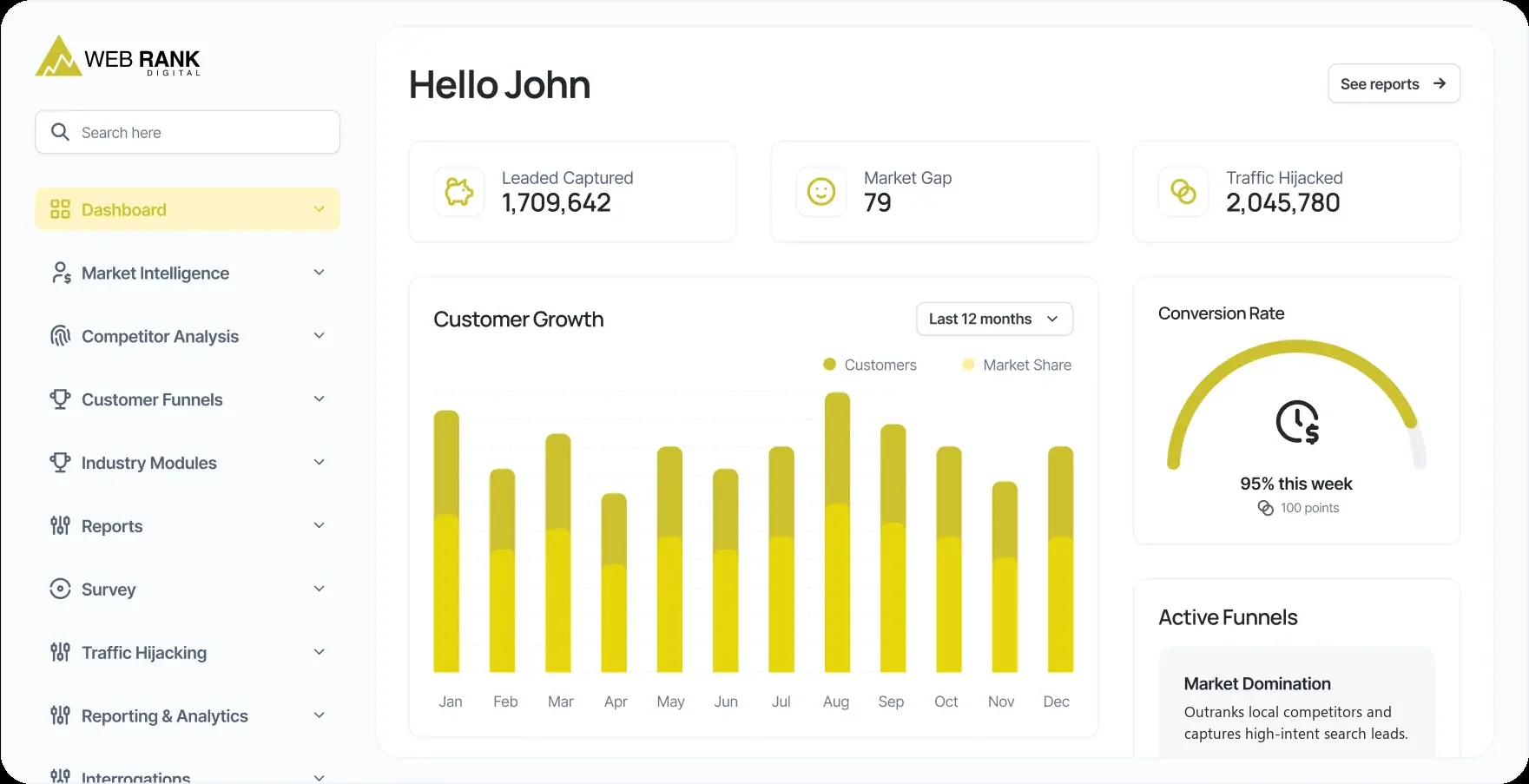
A competitor analysis system also helps you notice when a competitor adds a new service, changes their pricing, or launches a promotion. That early warning gives you time to respond thoughtfully rather than react in panic. For small businesses, the difference between a proactive move and a reactive one is often the difference between gaining market share and losing it.
Evaluate Their Market Positioning
Market positioning is how a competitor presents themselves to the world. Do they position as the premium option, the budget-friendly choice, the local expert, or the innovative newcomer? Their website copy, taglines, and visual style all communicate positioning. Compare that to your own brand voice and value proposition. If every competitor in your niche uses the same language ("reliable," "trusted," "professional"), you can stand out by being more specific: "same-day service in Charlotte's South End" or "organic ingredients sourced from local farms."
Look at their calls to action, their guarantees, and the problems they emphasize solving. If they all focus on speed, you might win by focusing on thoroughness. If they all talk about low prices, you might win by emphasizing quality and longevity.
Look for Blind Spots in Their Content
Content marketing is a long-term competitive lever. Check whether your competitors blog, create videos, or maintain an FAQ section. If they produce regular content, note the topics they cover. If they do not, that is an opportunity for you to build authority by answering the questions customers are actually asking. Search for common questions in your industry (like "how often should I service my HVAC" or "what to look for in a dispensary near me") and see which competitors have answered them. The ones who have not are leaving a gap you can fill.
Track Their Local and Social Engagement
Engagement on social media and local community forums can reveal how responsive a competitor is. Do they reply to comments and messages? Do they post regularly about local events or partnerships? A business that is active in the Charlotte community - sponsoring a little league team, attending a farmers market, or collaborating with other local businesses - builds trust that is hard to replicate with ads alone. If your competitors are absent from local conversations, you can build relationships that set you apart.
Build Your Competitive Advantage from What You Learn
The whole point of competitor analysis is not to copy, but to find your own lane. Once you have gathered observations about pricing, service gaps, reviews, positioning, content, and engagement, look for patterns that suggest a clear opportunity. Maybe all local competitors charge for emergency call-outs, but you could offer that service free with a maintenance plan. Maybe everyone uses the same generic photos, and you could invest in authentic images of your team and your work. Maybe no one offers a satisfaction guarantee - that could become your headline.

Turn your findings into a short list of actions. Pick one or two gaps to address first, and measure the impact. As your business grows, revisit the checklist every quarter. Markets shift, competitors change their strategies, and customer expectations evolve. Staying current gives you a consistent advantage without needing to be the biggest player.
For businesses looking to streamline this process, Web Rank Digital, located at 401 s Graham st Charlotte, NC 28202, offers a customer growth platform that includes tools for competitor research and market gap detection. You can reach them at +1 877-726-5871 to learn more about how their platform supports ongoing competitive analysis.